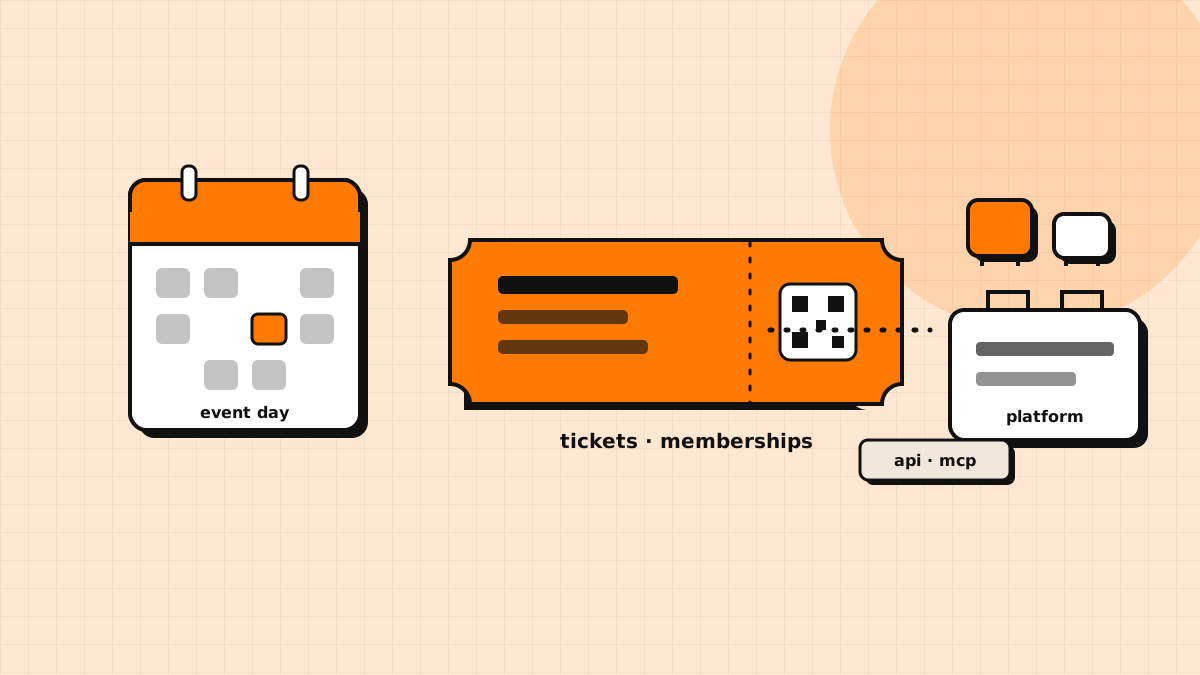
Social Events & Ticketing Platform
- 7+
- Major product initiatives led end to end
- 3
- Surfaces in one monorepo
Services · 01
Fast, accessible web apps in React and Next.js that hold up under real traffic.
How this runs
Where we start
A web product is judged in the first two seconds — load time, layout stability and whether the first tap works decide if someone stays, long before they see the feature you spent a month on. I build with that reality in mind, and I work the whole stack from component to deploy pipeline, so one person can own a feature from UI through API and database. Wherever you're starting from, week one looks concrete:
You have an idea
A product in your head, maybe a deck. It needs scope, an architecture and a first version real users can touch — without burning the budget on the wrong features.
Week one · A written brief, a clickable flow of the core journey, and a milestone plan with the risky parts named.
You have designs or a spec
Figma files or a requirements doc, and you need an engineer who ships it faithfully — pixel discipline, state handled, the edge cases your designer never drew.
Week one · The design broken into components and routes, tokens set up, and the first screens live on a preview URL.
You have a web app that hurts
It exists, it earns money, and it's slow or brittle. You want it faster and calmer without a rewrite that freezes the roadmap.
Week one · A performance and code audit with baselines, plus the quick wins already shipped where they're safe.
The build sheet
Next.js sites with CMS or MDX content, image optimization, SEO and OG metadata handled.
Role-based apps with data tables, charts, filters and workflows that stay fast with real data.
Carts, inventory holds, coupons and embeddable checkout with Stripe or Razorpay.
Installable, offline-capable experiences for teams that cannot wait on store review.
Storybook-driven component libraries with tokens, docs and visual tests.
Auth, payments, analytics, email, maps, AI providers and internal APIs wired cleanly.
Standards I don't negotiate
Performance and accessibility aren't review comments at the end — they're budgets set in week one, checked in CI on every pull request and verified on real devices before launch.
Largest Contentful Paint
< 2.5s
Core Web Vitals 'good' threshold
TargetInteraction to Next Paint
< 200ms
Core Web Vitals 'good' threshold
TargetCumulative Layout Shift
< 0.1
Core Web Vitals 'good' threshold
TargetLighthouse Performance
90+
Mobile, throttled
TargetAccessibility
WCAG 2.2 AA
Keyboard, contrast, screen readers
TargetPWA
Installable
When offline or home-screen use matters
TargetAlways true, whatever the project
Budgets enforced in CI, so speed does not erode release by release.
TypeScript, Jest and end-to-end coverage on the flows that make you money.
Readable structure, Storybook docs and a handover so you are never locked in.
Agentic tooling for scaffolding, tests and refactors, with a human owning every decision.
Proof, from shipped work
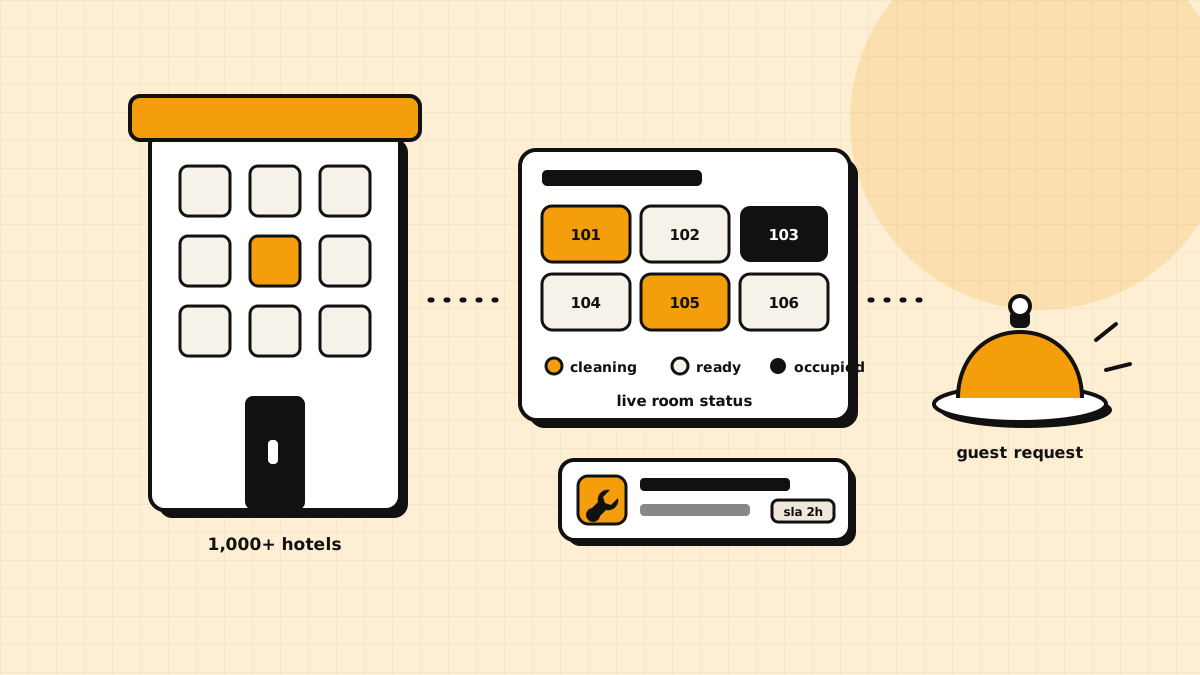
Seven-plus years across healthcare, hospitality, events, government and e-commerce — here is web work you can read in full, with the numbers it shipped with.
7+
Years shipping web products
10+
Production apps live
Web and mobile, App Store, Play and web
25-40%
Performance gains on existing apps
Measured across past engagements
Why the speed obsession: Google/SOASTA research found 53% of mobile visits abandon pages that take over 3 seconds — performance is revenue, not polish.
The stack
Build
 Next.js
 React
React TypeScript
 Tailwind CSS
State & data
 Redux
Redux GraphQL
 PostgreSQL
 Firebase
Quality
 Jest
Jest Playwright
 Storybook
Ship
 Node.js
 Vercel
 Netlify
AI in the engagement
Not a sticker on the proposal — specific places in the engagement where AI tooling buys back budget for the work that needs judgement.
Scoping
Routes, schemas and form scaffolding drafted from the written brief, so the first demo is a working skeleton instead of a slide.
Build
Migrations, CRUD plumbing and refactors AI-drafted and human-reviewed — budget flows to architecture and edge cases, not typing.
QA
Agents draft the unit and integration suites; I keep the ones that catch real regressions and wire them into CI.
In your product
RAG assistants, structured extraction and LLM workflows — built with evaluation, fallbacks and cost controls, not just an API key.
45%
CI time cut on an AI-agent-heavy monorepo
Pipeline reshaped to follow the diff
5
Agentic coding tools in daily use
Cursor, Claude Code, Codex, Windsurf, Antigravity
1
MCP server shipped on a public API
Platform plugins authored from chat
The guardrail · Every AI-drafted line gets the same review a human pull request would — and that review is never skipped. If I wouldn't put my name on it, it doesn't ship.
Process
Expand each step to see what happens and what you receive.
FAQ
Both. Most projects I deliver end to end: Next.js or React on the front, Node.js or Firebase on the back, with the database and deploy pipeline included. If you already have a backend team, I slot in on the frontend and API contract.
Tell me what you are building and where it hurts. I will reply with an honest take and a plan.