Statewide Field Inspection Platform
- 500k+
- Downloads
- 5
- Functionary roles with their own inspection sets
Services · 02
React Native apps for iOS and Android that survive bad networks, app review and scale.
How this runs
Where we start
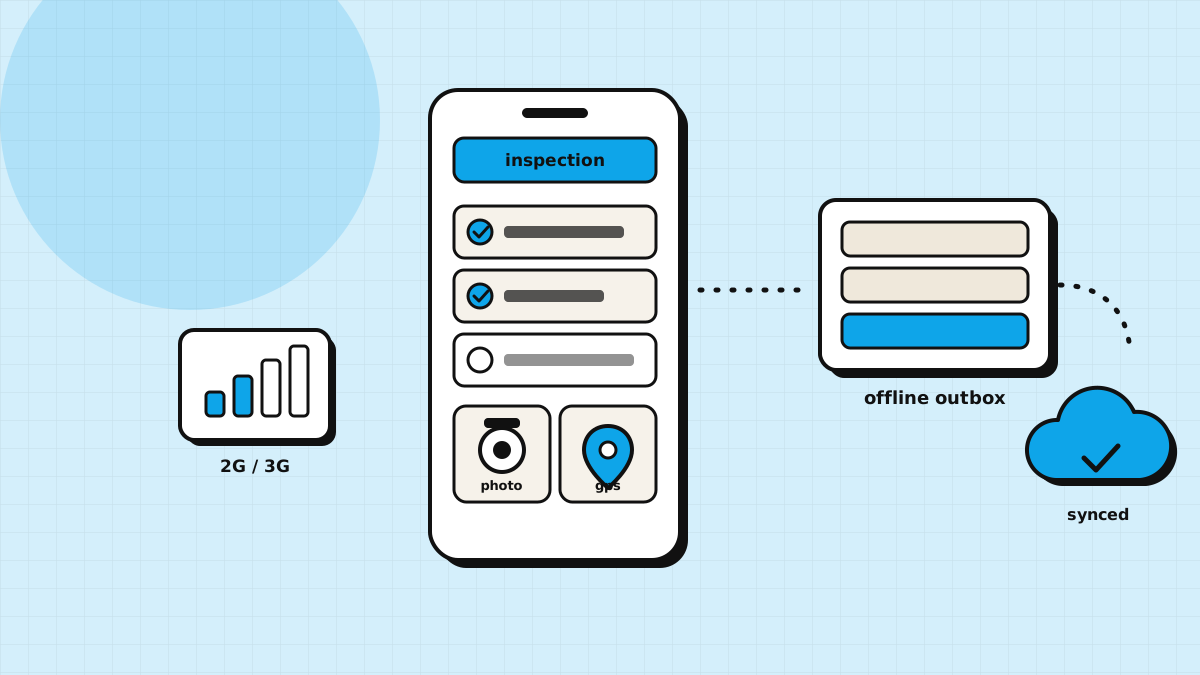
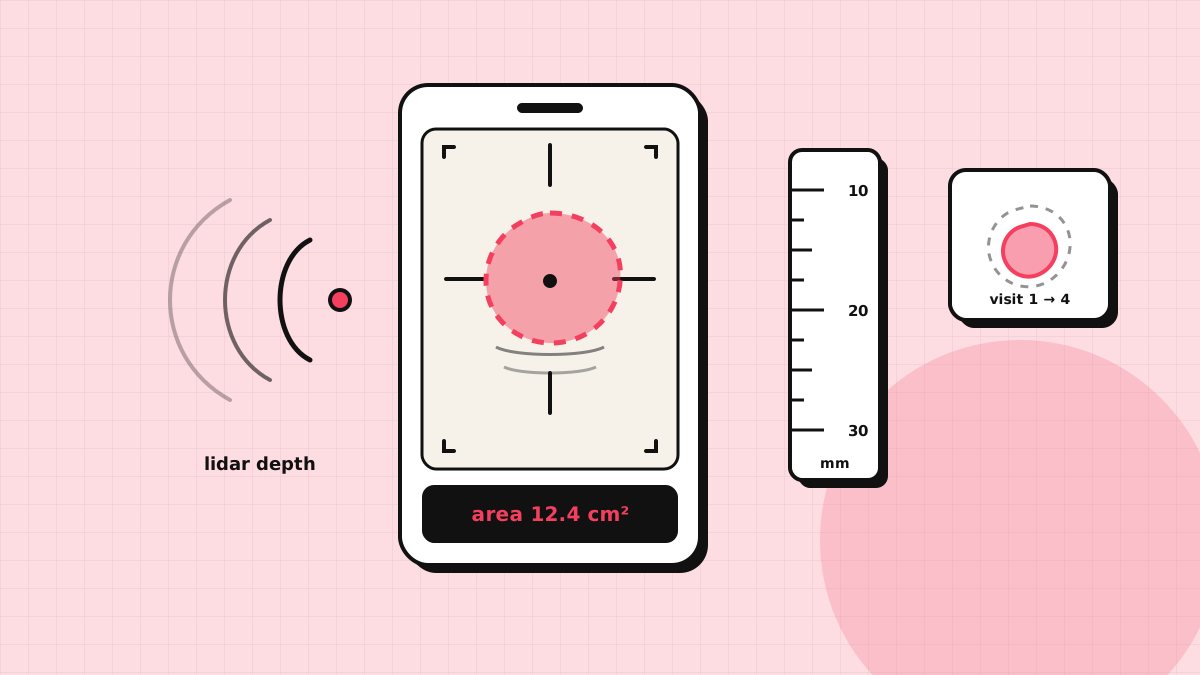
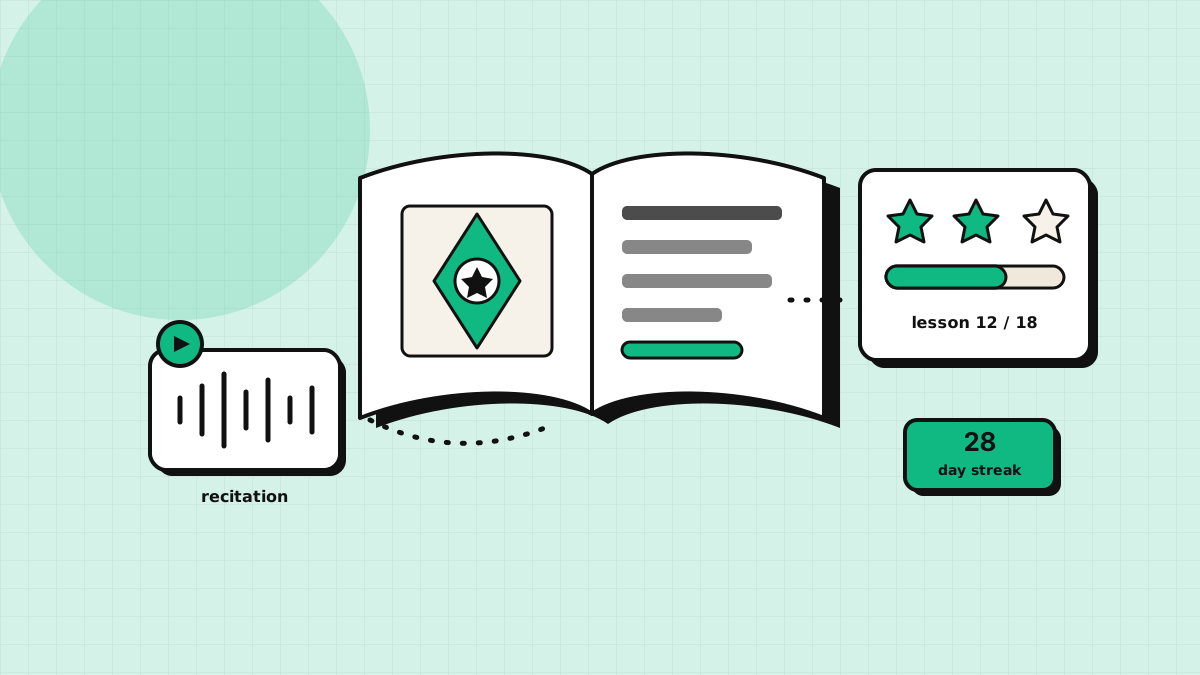
Mobile is where I have shipped the most and learned the hardest lessons: a statewide field app used on 2G networks, an AR and LiDAR clinical tool measuring wounds to the millimetre, an enterprise wellness app pulling steps from HealthKit and Google Fit. Each one taught me that the platform edge cases are the product — so offline support, release automation and crash monitoring belong in version one, not version two.
You have an app idea
A product that belongs on phones, and a budget that can't fund two native teams. You need one codebase, both stores, and the native capabilities that make it feel real.
Week one · Flows and data model drafted, plus spike builds proving the risky native parts — camera, offline, payments — on real devices.
You have designs or a backend
The product exists on paper or on the web, and mobile is the missing surface. You need an engineer who respects the design and reuses the backend you already paid for.
Week one · The design mapped to screens and navigation, the API contract reviewed, and the first build running on your phone.
You have an app that misbehaves
Crashes, one-star reviews, an SDK three majors behind. Often this routes to my maintenance service — but either way it starts the same honest way.
Week one · Crash logs and vitals read, a baseline recorded, and a ranked list of what to fix before anything new gets built.
The build sheet
React Native with Expo or bare workflow, chosen for the native surface your app needs.
Queued writes, conflict handling and background sync for users with unreliable networks.
ARKit depth, LiDAR, image processing, GPS, HealthKit, Google Fit, biometrics and more.
Notifications, universal links, chat and live updates with WebSockets or Firebase.
Stripe, Razorpay and in-app purchases with receipts, retries and failed-payment flows.
Fastlane, EAS and CI/CD for Dev, QA, Stage and Prod builds plus store submission.
Standards I don't negotiate
A realistic path for a first release. Timelines flex with scope, but the order does not: the risky native work is proven early, and store requirements are handled before the last week.
Weeks 1-2
Flows, data model, native capability spikes (camera, offline, payments) and a release plan.
Weeks 3-6
Navigation, auth, main features and the design system. Weekly TestFlight / internal builds.
Weeks 7-8
Offline behaviour, slow-network testing, crash monitoring, accessibility and performance passes.
Weeks 9-10
Listings, screenshots, privacy labels, review submission and a staged rollout.
Ongoing
Analytics review, OS upgrades, new features and the crash-free rate kept above target.
Always true, whatever the project
Typed boundaries, error reporting and release gates that kept past apps stable at scale.
Offline queues and compression proven on 2G/3G field deployments.
Comfortable in Swift/Kotlin modules, ARKit, OpenCV and Skia when JavaScript is not enough.
Automated builds, environment switching and store submissions done many times before.
Proof, from shipped work
Government field officers on 2G, clinicians measuring wounds at the bedside, learners keeping streaks offline — these are the conditions my mobile work ships into. Read the full stories:
500k+
Downloads on a single field app
Statewide government inspection app
90%
Crash-rate reduction, up to
Clean architecture and monitoring
70-80%
Automated test coverage
Jest and React Native Testing Library
The bar is set by the stores themselves: Google Play reduces visibility for apps whose user-perceived crash rate exceeds 1.09% — stability is distribution.
The stack
Build
 React Native
 Expo
Expo TypeScript
State & data
 Redux Toolkit
 Firebase
 AWS Amplify
Device & native
 OpenCV
Quality & release
 Jest
Jest Fastlane
AI in the engagement
Mobile has more surface area than web — two platforms, native modules, store policies. AI tooling helps me cover that surface faster without lowering the bar on what ships.
Scoping
Agents enumerate permission, background and lifecycle cases per platform, so the plan prices them instead of QA discovering them.
Build
Swift and Kotlin module scaffolds AI-drafted, then verified on physical devices before anything merges.
QA
AI-drafted test suites across OS versions and device classes; I keep what catches real regressions.
In your product
Voice, vision and assistant features integrated with evaluation, fallbacks and cost controls.
5
Agentic coding tools in daily use
Cursor, Claude Code, Codex, Windsurf, Antigravity
70-80%
Test coverage maintained
AI-drafted tests, human-kept
2
Platforms from one typed codebase
iOS and Android
The guardrail · A model can draft the native bridge; it cannot test it on a four-year-old Android in a basement stairwell. The device pass is mine, on every release.
Process
Expand each step to see what happens and what you receive.
FAQ
For most products React Native wins on speed and cost with one team and one codebase. I go native (or write native modules) when the app lives on camera, AR, audio or heavy graphics. I have done both and will recommend what fits.
Tell me about the product and the users. I will come back with a plan, a timeline and the risks I see.