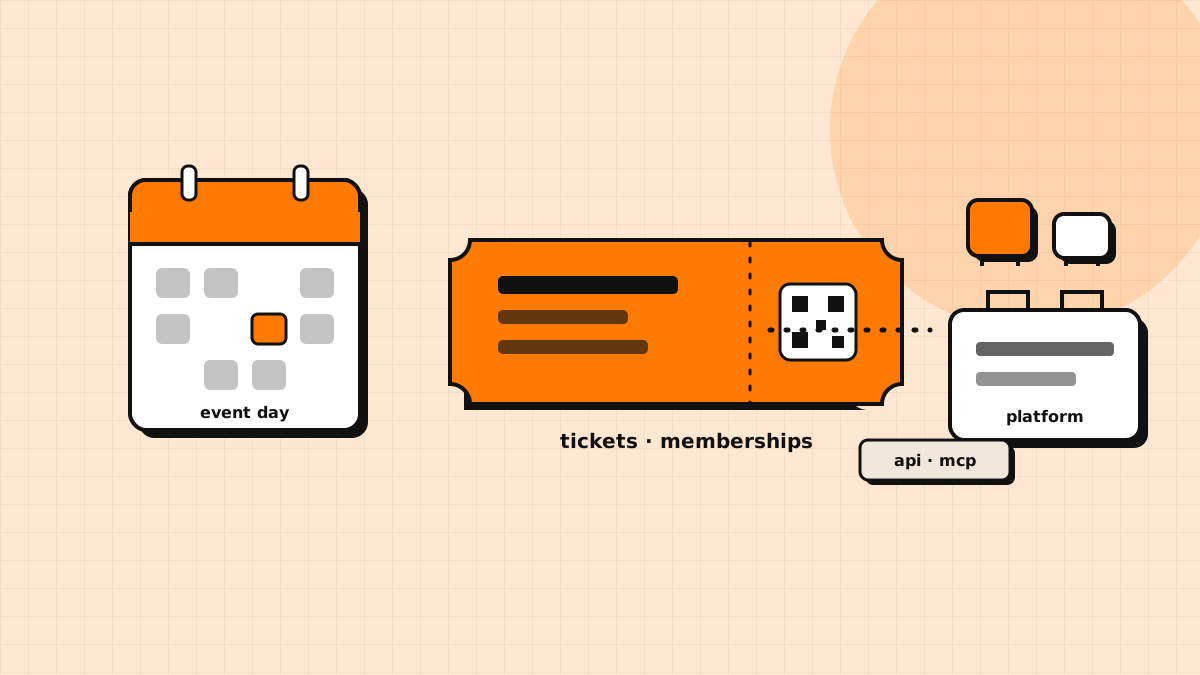
Social Events & Ticketing Platform
- 7+
- Major product initiatives led end to end
- 3
- Surfaces in one monorepo
Services · 03
Typed, documented APIs and backends that your frontend, partners and AI agents can trust.
How this runs
Where we start
Good APIs are boring in the best way: predictable shapes, clear errors, versioned contracts and docs that match reality. I have built them for ticketing and payments, for field apps syncing from flaky networks, for hotel operations running in real time — and most recently for AI agents that call the same endpoints humans do. Every API ships with auth, rate limits, validation, logging and a test suite, because retrofitting those is where incidents come from.
You're starting from zero
A product that needs its first real backend: data model, auth, payments, the works. The decisions made now are the ones you'll live with for years.
Week one · The schema and API contract drafted and reviewed with you, plus a walking-skeleton endpoint deployed with auth and CI already on.
Your frontend is blocked
The app team is ahead of the API. You need endpoints that match how the client actually queries, documented well enough that nobody has to ask.
Week one · The client's real data needs mapped to a contract, the highest-priority endpoints stubbed against the spec so frontend work unblocks immediately.
Your API wobbles under load
Timeouts at peak, mystery incidents, a p95 nobody measures. It works — until the day that matters most.
Week one · Traffic and query analysis with baselines recorded, the top bottlenecks identified, and the cheap fixes (indexes, caching, N+1s) already in review.
The build sheet
Typed schemas, pagination, filtering and versioning, with OpenAPI or GraphQL docs generated from code.
JWT, OAuth, Cognito or Firebase Auth with role- and organization-aware access control.
Stripe and Razorpay: checkout, subscriptions, webhooks, failed-payment retry and refunds.
WebSockets, Socket.io, Firebase listeners, queues and scheduled functions.
PostgreSQL, MySQL, Firestore: schemas that fit the queries, with safe migration paths.
Public APIs exposed to AI assistants with scoped keys, rate limits and PII redaction.
Standards I don't negotiate
An example of the shape I aim for: predictable envelopes, explicit pagination, machine-readable errors and headers that tell the client what it needs to know.
{
  "data": [
    {
      "id": "evt_9f3a",
      "title": "Summer Rooftop Social",
      "status": "published",
      "startsAt": "2026-06-12T18:30:00Z",
      "tickets": { "available": 42, "currency": "USD" }
    },
    {
      "id": "evt_7c21",
      "title": "Founders Breakfast",
      "status": "published",
      "startsAt": "2026-06-14T08:00:00Z",
      "tickets": { "available": 8, "currency": "USD" }
    }
  ],
  "page": { "nextCursor": "Y3Vyc29yOjI=", "limit": 2 },
  "meta": { "requestId": "req_01J9X", "rateLimit": { "remaining": 998 } }
}Always true, whatever the project
Validation at the edge, least-privilege rules, secrets management and encrypted payloads where needed.
Caching, indexes and p95 latency tracking, with logs and traces you can actually search.
Frontend, partners and AI agents work from the same generated spec.
Pipelines that test what changed, with emulators and long suites kept off the critical path.
Proof, from shipped work
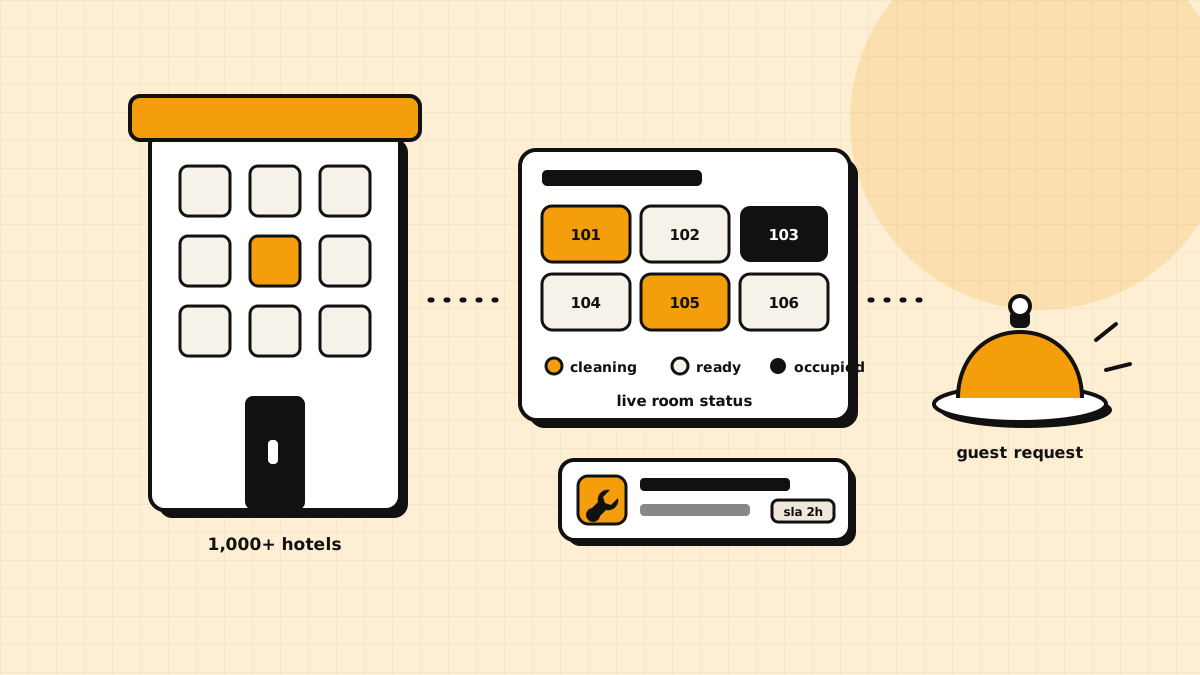
Ticket drops that sell out in minutes, a thousand hotels syncing room states in real time — the backends below have been through their worst days already. Read the full stories:
7+
Years building production APIs
1,000+
Hotels served by a real-time ops backend
Housekeeping and maintenance SaaS
45%
CI time cut on a three-app monorepo
Pipeline follows the diff
Latency compounds quietly: Amazon famously measured roughly 1% of sales lost per 100ms of added latency — your p95 is a business number.
The stack
Runtime
 Node.js
 TypeScript
 Express
 Cloud FunctionsFirebase
Data
 PostgreSQL
 MySQL
MySQL Redis
RedisAPIs & realtime
 GraphQL
 AWS AppSync
 Socket.ioAmazon Cognito
Ship & observe
 Docker
 GitHub Actions
AI in the engagement
Backends are where AI pays off twice: once in how fast I build them, and again when the API itself becomes something an assistant can call.
Scoping
Validators, types, clients and docs generated from one schema, so nothing drifts and the contract review happens before any code.
Build
CRUD layers, webhook handlers and migration scripts AI-drafted; data model and money paths designed by a human.
QA
AI-drafted test matrices for auth, pagination and error paths; load profiles built from real traffic patterns.
In your product
MCP servers, RAG pipelines and LLM workflows with scoped keys, redaction and provider fallbacks — evaluation baked in.
45%
CI time cut on an AI-agent-heavy monorepo
Pipeline reshaped to follow the diff
1
MCP server shipped on a public REST API
Same scopes and rate limits as any API key
3
LLM providers behind one support assistant
OpenAI, Anthropic, Gemini via LangChain
The guardrail · AI can generate the validator; it cannot decide what your refund policy should be. Contracts, money paths and security boundaries get human eyes, every time.
Process
Expand each step to see what happens and what you receive.
FAQ
Firebase or serverless for products that need to ship fast with small teams and spiky traffic. A conventional Node.js server with PostgreSQL when you need complex relational queries, long-running jobs or strict cost predictability. I have run production on all three and will recommend based on your data and team.
Share what you are integrating and what breaks today. I will reply with an honest take and a plan.